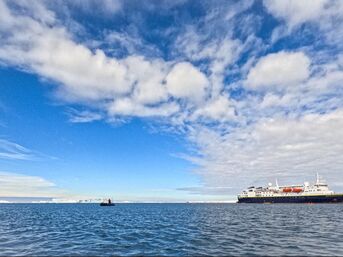
Planning a once-in-a-lifetime trip to Antarctica can be overwhelming. The industry expected a 40% increase in visitors during the 2023 season. This also means more cruise lines and trip operators are offering itineraries to the White Continent. So, how do you choose? Here are my thoughts and unfiltered opinion on the Lindblad Expedition on the National Geographic Explorer cruise I took in January 2024.
Environmental Impact
Antarctica is one of the few places remaining in the world that is relatively untouched by humans. The Antarctic Treaty, signed in 1959 provides, among other things, that the land is used only for peaceful purposes, that there is freedom of scientific investigation of the continent, and that the scientific observations and results are made freely available. Subsequently, an environmental protection protocol was established which also declares the continent to be a natural reserve devoted to peace and science. Lastly, in 1991, the International Association of Antarctic Tour Operators (IAATO) was founded to advocate and protect the practice of safe and environmentally responsible private-sector travel to the Antarctic.
Since the international community has gone to such great lengths to cooperate and protect the natural habitat of Antarctica, it is paramount that a cruise operator follows the requirements for private-sector travel. The Lindblad Expedition and National Geographic partnership for Antarctic expeditions and cruises immediately checked those boxes. They are a member of IAATO and were meticulous about adhering to the principles and regulations.
The Ship & Accommodations
The National Geographic Explorer originally served as a passenger ferry in Norway and maintains the exterior look and feel of an expedition vessel. Despite significant swells in the Drake Passage, the ship (and the incredible captain and crew) appeared to handle it well. Its smaller size also allows for landings on Antarctica.
The majority of the passenger cabins were last updated in 2007 and do feel a little dated, but their website indicates the suites received a facelift in 2023. We stayed in their Category 4 Upper Deck room. While the room was more cozy than spacious, we did not feel cramped, even with all of our gear. The bed was comfortable, the bathroom was a decent size, and there was sufficient drawer and closet space.
My favorite common areas were the observation lounge and the chart room. The observation lounge had expansive windows and a library to soak up the scenery as the ship moved between anchorages. In the chart room, physical maps were available to follow our progress. It was also the location of the coffee machine and hot chocolate.
I did not expect Wi-Fi on the ship, but there was free access to the basic service. The basic service was sufficient for email and internet browsing throughout the voyage. Higher speed services were available for a fee.
Staff & Crew
The staff and crew were incredible. The staff included the expedition leader, naturalists, photography instructor, and National Geographic photography expert. Collectively, they give lectures, act as guides during excursions, and provide daily briefings. The group on our Antarctic cruise was extremely knowledgeable, engaging, and passionate about Antarctica and its preservation. I appreciated that they were available to chat with guests during meals and looked for ways to make the experience special for each passenger.
Likewise, the crew maintained a high level of hospitality and professionalism. They quickly learned names and personal preferences which was greatly appreciated. The captain maintained an open bridge policy so unless a crew meeting was in progress passengers were always welcome on the bridge.
Excursions
The nature of an Antarctica expedition is that the conditions are unpredictable. Despite every effort made by the staff and crew, the weather can interfere with excursions. However, since the ship holds fewer passengers when the opportunity presents itself, everyone has a chance to participate in the daily activities.
The staff seamlessly organized the passengers to coordinate landings and Zodiac rides to minimize waiting and maximize time at each anchorage. Our excursions included hikes, kayaking, Zodiac cruises, walks to penguin colonies, and the famed polar plunge.
Dining
The food was also a highlight of our trip. Breakfast was a buffet of hot and cold items with eggs to order available. I’m still thinking about the fresh loaves of bread used for a thick piece of morning toast.
Lunch and dinner were plated coursed meals. Considering all our provisions for the ten-day voyage were on board when we left port in Ushuaia, the variety of dishes was astounding. As with most cruises, there is never a lack of food available. In addition to the set meals, afternoon tea was accompanied by finger sandwiches or a sweet treat, and happy hour included passed canapes. An added bonus is that all beverages – wine, beer, cocktails – are included with the cruise!
| PROS | CONS |
| ✓ Staff and Crew ✓ Dining ✓ Drinks Included ✓ Excursions ✓ Service ✓ Free, Basic Wi-Fi | -Dated Ship & Amenities |
Overall
I would return to Antarctica on a National Geographic and Lindblad Expedition in a heartbeat. The hospitality and service were top-notch, and the passion for Antarctica and the environment was infectious. While this was my first National Geographic and Lindblad Expedition, I would not hesitate to embark on any of their other itineraries.
 Adventures in Sweets
Leave a comment